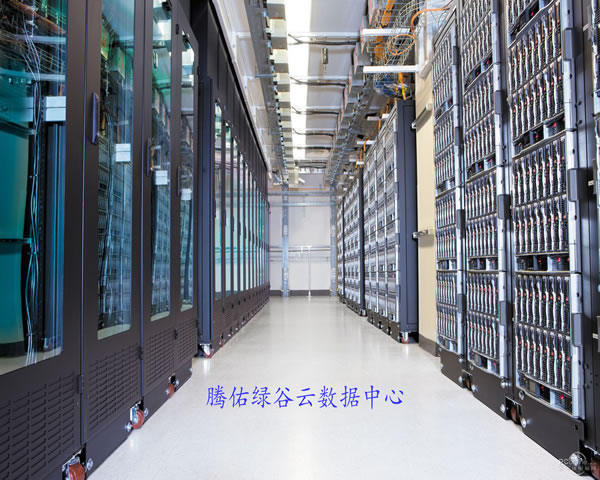
introduction: hong kong, as the asia-pacific internet hub, provides low-latency advantages for the deployment of site groups for users in greater china and southeast asia. this article focuses on "analysis of sub-cloud architecture of hong kong site cluster servers to improve website reliability and traffic distribution techniques". it systematically introduces sub-cloud design concepts, traffic scheduling strategies and operability and maintainability suggestions to help the technical team improve usability and access experience in localization and seo optimization scenarios.
overview of hong kong station cluster server sub-cloud architecture
the sub-cloud architecture refers to splitting the entire site group into a number of relatively independent and autonomous small cloud domains. each sub-cloud is responsible for the traffic of a specific site or region. for hong kong site cluster servers, sub-clouds can be divided according to business lines, traffic levels or geographical targets to facilitate resource isolation, fault limitation and elastic expansion, thereby maintaining the stability and continuity of the overall service in the face of sudden traffic or regional failures.
the role of sub-cloud architecture in improving reliability
through sub-cloud isolation, the scope of impact of a single point of failure is limited, and operation, maintenance and updates can be verified in some sub-clouds before being fully promoted. the hong kong site cluster servers can implement off-site redundancy, cross-machine room failover and hierarchical backup under the sub-cloud model, further enhancing disaster recovery capabilities, ensuring that search engine crawlers and user access still have available paths when nodes are abnormal, and reducing index and traffic losses.
traffic distribution strategy and intelligent scheduling
efficient traffic distribution combines geographical routing, delay detection and weighted scheduling. for hong kong site cluster servers, the near-source priority strategy can be used to attract local users, while dynamically adjusting weights based on real-time performance indicators to avoid single-point congestion. intelligent scheduling can also combine business priorities to allocate important pages or apis to high-performance sub-clouds to ensure sla and search engine crawling frequency.
load balancing and failover design points
load balancing should adopt a multi-level design: edge and intranet levels are combined to support session maintenance, health checking and smooth migration. when deploying hong kong cluster servers, it is recommended to configure active and passive fault detection mechanisms to ensure that traffic is quickly diverted when a node goes offline, and to avoid long timeouts or retries that lead to search engine crawling failures and user experience degradation.
dns strategy and geo positioning optimization
dns is the key to directing the traffic of the website group. for the hong kong site group server, geographical scheduling should be used combined with low ttl to achieve fast switching. at the same time, attention should be paid to the balance between ttl settings and search engine crawler cache behavior. geo positioning can determine the source based on the request ip or cdn front-end, and guide traffic to the optimal sub-cloud, which not only reduces latency but also improves local rankings and user retention rates.
security and compliance requirements considerations
sub-cloud division also brings the convenience of security boundary management. hong kong site group servers need to consider data sovereignty, privacy compliance and ddos protection. it is recommended to deploy unified access control, waf and traffic cleaning mechanisms in each sub-cloud, and establish cross-sub-cloud audit and key management processes to ensure that reliability and traffic distribution are improved without weakening the security posture.
monitoring, logging and automatic expansion strategies
refined monitoring is the cornerstone of ziyun operations. the request delay, error rate, resource utilization and crawling indicators should be collected for the hong kong station group server, and automatic expansion or traffic redirection should be initiated under threshold triggers. centralized logs facilitate problem tracking, while localized monitoring panels help quickly locate computer room or sub-cloud anomalies and shorten recovery time.
implementation steps and best practices
the implementation suggestions are promoted in phases: evaluate business and traffic characteristics, plan sub-cloud division plans, complete small-scale pilots and conduct traffic segmentation and grayscale release, and then conduct capacity and fault drills. for hong kong site cluster servers, we should pay attention to the compatibility between dns and cdn, monitoring the integrity of buried points, and automation of operation and maintenance to reduce the risks caused by human intervention.
common misunderstandings and how to avoid them
common misunderstandings include over-splitting leading to complex management, setting ttl too short causing parsing jitter, and ignoring cross-sub-cloud consistency. the way to avoid this is to formulate clear boundaries, properly configure dns and cache policies, and ensure consistent policies among sub-clouds through unified configuration templates and automated tools, so as to enjoy isolation benefits while maintaining manageability.
summary and suggestions
summary: the hong kong site cluster server sub-cloud architecture has obvious advantages in improving website reliability, optimizing traffic distribution and improving local search performance. it is recommended to gradually implement sub-cloud solutions based on business scale and operation and maintenance capabilities, prioritize dns and load balancing strategies, enhance monitoring and automation, and continue to optimize traffic scheduling and disaster recovery strategies through data-driven optimization to achieve stable, scalable and seo-friendly site group operations.
- Latest articles
- Network Interconnection And Routing Practice Of Hong Kong Cloud Server Cn2 In Multi-cloud Architecture
- From Logs To Traceability, Tracking And Analysis Methods After Tencent Cloud Hong Kong Server Was Attacked
- Stable And Cheap Malaysian Server For Live Video Broadcast. Key Points Of Delay And Jitter Control
- Sharing The Steps, Risks And Implementation Experience Of Enterprises Migrating To Cambodian Servers Alibaba Cloud
- Complete Huawei Cloud Singapore Server Instance Creation And Environment Configuration From Scratch In One Hour
- Practical Guide To Building A Korean Cloud Server And Designing A Data Backup And Disaster Recovery Center
- Operator Comparison Analysis Of Latency And Stability Of Vietnam Vps Cn2 Different Packages
- How To Choose A Thai Cloud Server? Comparison Of Manufacturer Reputation, SLA And Technical Support
- How To Calculate Elastic Expansion Costs In The Hong Kong Server Hosting Price List Based On Business Peaks
- The Role And Implementation Of Vps Cambodia In Cross-border Data Synchronization And Backup Solutions
- Popular tags
-

Hong Kong Server Computer Disassembly Tutorial Details And Faqs
detailed introduction to the steps to disassemble hong kong server computers and answers to frequently asked questions to help users better perform server maintenance. -

IP Segment Analysis And Application Starting With Native IP In Hong Kong
In-depth analysis of the IP segments starting with native IP in Hong Kong and their applications in the network to help enterprises improve network performance. -

Full Analysis Of The Advantages And Usage Strategies Of Hong Kong’s Native Ip
this article comprehensively analyzes the advantages and usage strategies of hong kong native ip to help you better use hong kong native ip to improve network performance and security.